
Work experience
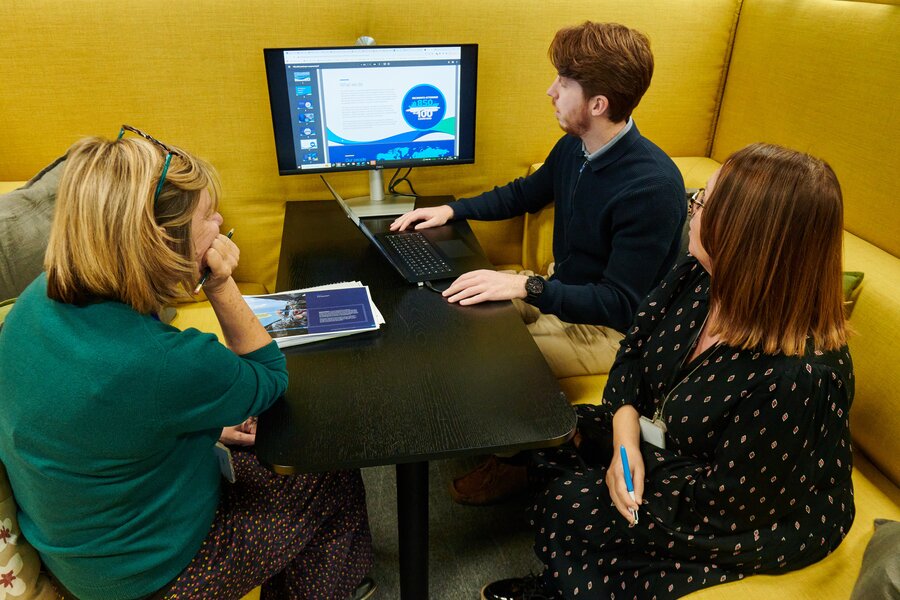
We're keen to support you as a student at different stages in your studies to experience working life, understand more about different roles and career opportunities at ITOPF, and perhaps help you to shape your plans for your future studies or career path.
Our work experience placements are particularly well suited to those with an interest in fields such as: STEM Sciences (perhaps Biology, Chemistry and Environmental Sciences), Marine Pollution and Conservation, Geography (GIS/Mapping), as well as general business operations.
Typically, placements will be for one and involve spending some time with colleagues across our organisation to give you the broadest experience possible of ITOPF and the various roles available. While on placement, you will primarily meet with and shadow colleagues at ITOPF as well as experience some potential project work if of interest as part of the overall experience. Our work experience placements are unpaid, although we can contribute to travel expenses.
As a small organisation, we are limited in the number of work experience placements we can offer each year. To ensure we can provide a meaningful and high-quality experience, applications for summer work experience placements are open from 20 January to 31 March each year. We will endeavour to accommodate preferred dates wherever this is possible.
To submit an application, please send a copy of your CV along with a cover letter explaining:
- Areas of particular interest to you
- At what point in your studies you are, eg Year 10, Year 12, undergraduate student, postgraduate student
- What you would hope to gain from the work experience
- Your ideal dates for work experience and if there is any flexibility on this
Please send your application to recruitment@ITOPF.org. We look forward to hearing from you!
Vision & Mission Statement
"To be a trusted source of objective technical advice worldwide on preparedness and response to accidental marine spills."
"To promote effective response to marine spills of oil, chemicals and other substances as a means of reducing impacts on the environment and affected communities."
Core Values
Collaboration – inspiring teamwork and cooperation to achieve the goal of effective spill response.
Integrity – engendering trust in our work through honesty and scientific principles.
Objectivity – providing unbiased, consistent advice to all who seek it.
Respect – empowering a friendly, supportive culture that values diversity and the abilities and experience of all.
Diligence – delivering our services to the highest standards of excellence, with skill and good judgment.