
R&D Award
Apply for funding for research projects related to accidental spills of oil and cargo in the marine environment
The 2027 Award
- Apply for the 2027 Award from 1 September 2026.
- Applications will close on 4 December 2026.
- The decision will be announced in April 2027.
- Applications are invited for short-term research projects only for up to £70,000.
- The PhD funding route will reopen for the 2028 Award.
ITOPF is recognised and respected globally as a source of objective technical expertise in the area of accidental spills of oil and chemicals from ships. Investing in R&D is one way we fulfill our mission of promoting effective response to marine spills of oil, chemicals and other substances.
Each year, around 12.7 billion tonnes of oil, chemicals, raw materials and finished goods are safely delivered by sea. Nevertheless, from time to time, accidents do occur that result in pollution of the marine environment by oil or chemicals. The severity of the pollution depends upon many factors. Continuous improvement in the understanding of the fate and effects of these substances will lead to improvements in accepted ‘best practice’ for spill response and environmental monitoring.
The ITOPF R&D Award provides financial support for research projects which have the potential to lead to improvements in spill-related matters. This includes (but is not limited to) preparedness, monitoring, response, environmental effects and impact mitigation.
Prior to the Award's inception, ITOPF encouraged and promoted many R&D projects, and funded some, such as DISCOBIOL. Therefore, the creation of this Award in 2011 was a natural step for ITOPF’s shipowner Members and Associate Members, and their Protection and Indemnity (P&I) insurers who recognise the importance of nurturing high-quality R&D.
Since the Award was established, more than £700,000 has been distributed to 14 separate R&D projects worldwide on behalf of ITOPF's shipowners and their P&I insurers.
The 2027 Award
The 2027 Award is open to any reputable R&D establishment or other organisation worldwide intending to fund a short-term project team to undertake relevant applied research. Applications are invited from all academic disciplines, although preference will be given to projects with an applied scientific focus and a clear pathway to practical benefit.
This year, special consideration will be given to projects addressing:
- Emerging fuels (including nuclear)
- HNS and dangerous goods (containers)
- Fisheries & mariculture
- Environmental monitoring & recovery
- AI, remote sensing and autonomous spill response
Funding explained
Funding is available at the following level:
- Short-term projects: up to £70k – this can be spread over 1-2 years and can include research costs, staff costs and overheads, and travel expenses.
- Please note: this year, applications are invited for short-term research projects only. The PhD funding route will re-open for the 2028 Award.
If you have any questions, please contact us at rdaward@itopf.org.
Winners of past ITOPF R&D Awards
Information on the winning projects and the results achieved, including reports and papers:
2026 - ALIVE
Investigating the fate, behaviour and toxicity of alternative marine fuels under Arctic conditions.
2024 - NurdleTrack
Developing and validating an analytical toolbox for source identification and hazard assessment of plastic pellets spilled at sea, with a further goal of developing a fast way to evaluate the toxicological hazards of plastic pellets.
2023 - PLASTOIL
Researching how a mixture of low-density polyethylene (LDPE) plastic pellets (nurdles) and propulsion fuel behaves and interacts in the marine environment.
2022- POLITE
Understanding the behaviour of Low and Ultra-low Sulfur Fuel Oils (LSFOs and ULSFOs) when exposed to sunlight and their effects on the marine environment.
2021 - MODELRISK
Development of models capable of predicting ecological hazards caused by hazardous and noxious substance (HNS) spills.
2018 - ExpOS'D
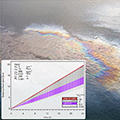
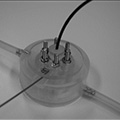
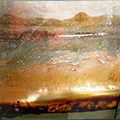
A one-year study to investigate the fate and behaviour of an oil slick subject to different dispersion mechanisms.
2017 - Virtual Reality Lab
"Real Spill Response Game", an exercise platform designed to improve preparedness and training for oil spills.
2016 - Rosdam
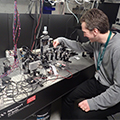
A feasibility study to investigate the detection capability of hyperspectral imaging technology (HSI) for oil spillages in ice-affected waters.
2015 - University of Washington
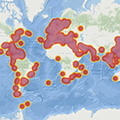
Study to identify and assess emerging risks from marine transportation.
2014 - FAMERR
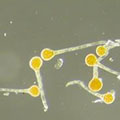
Determination of realistic spill profiles for chemicals to improve decision-making for spills in different geographic areas and seasons.
2013 - SLAM
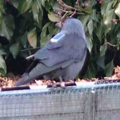
Development of a novel ‘back-pack’ system to track rehabilitated oiled birds without compromising their well-being.
2012 - FishHealth
Development of a methodology for an assessment of fish health and research into the impact of chemically dispersed oil on marine fish.