Search

Please use this search facility to search all content found within the website:

Search words under length of 4 characters are not processed.

177 results:

The ITOPF perspective (2002)

The ITOPF perspective (2002)

This paper reviews some of the commonly experienced lessons to be learned during oil spill response. From an ITOPF perspective, good management and co-ordination is the key to a successful response.

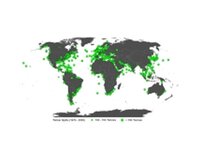
Use of GIS for assessing the changing risk of oil spills from tankers (2007)

Use of GIS for assessing the changing risk of oil spills from tankers (2007)

Assessing the risk of oil spills from ships has long been of interest to the maritime industry. Many factors affect the frequency of accidental oil spills, including the amount of oil transported and

Oil spill risks and the state of preparedness in the regional seas (2003)

Oil spill risks and the state of preparedness in the regional seas (2003)

The International Convention on Oil Pollution Preparedness, Response and Co-operation, 1990 (OPRC Convention) defines the basic elements for co-operation between government and industry in marine

2. Aerial Surveillance

2. Aerial Surveillance

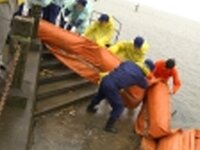
… that is to get airborne. In this programme we look at aerial surveillance…

3. At-sea response

3. At-sea response

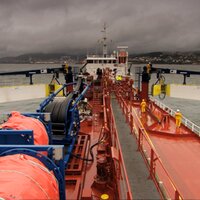
… be prepared and act fast. In this programme we look at different strategies…

5. Waste management

5. Waste management

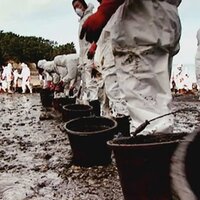
…In this programme we’ll be looking at how we can most effectively manage oily waste…

Cook Islands

… South Pacific Regional Environment Programme (SPREP) and party to the SPREP…

Bangladesh

… Asia Cooperative Environment Programme with Sri Lanka, Pakistan, India…

Argentina

… The PNA is currently engaged in a programme of training and exercises in…

Chile

… and an environmental monitoring programme was put in place. The unladen,…