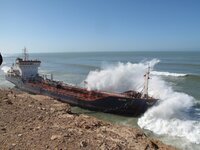
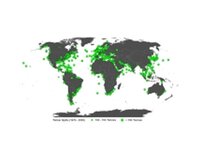
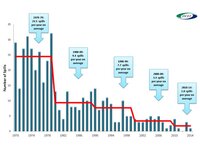
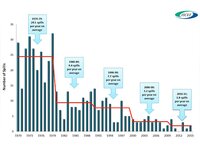
Ships interact with the environment in which they operate in many ways. Shipping casualties provide the most visual manifestation of the interaction between ships and the marine environment,
Assessing the risk of oil spills from ships has long been of interest to the maritime industry. Many factors affect the frequency of accidental oil spills, including the amount of oil transported and
Phil Ruck has a BSc (Hons) in Physical Geography and an MSc in Environmental Technology. Phil joined ITOPF in 2016 as a Technical Adviser, was later promoted to Senior Technical Adviser, and in 2022
Responding to ship-source pollution events is one of ITOPF's key services and its role on-site varies from case-to-case, depending on many factors including the type of pollution present, whether it
For Oil & HNS Ministry of Transportation Directorate General of Sea Transportation Jl.Medan Merdeka Barat No.8, Gedung Karsa Lt 13 Jakarta 10110 Indonesia Tel: 62 21 3811308 or 62 21 3451364, 24
Le Service National de Surveillance Côtière (SNSC) Le Base Navale de la Goulette Tunis Tel: +216 1 766330 or +216 1 736160 or +216 1 736904 Agence Nationale de Protection de l'Environnment (ANPE)
Whether solid, liquid or gaseous in form, when chemicals are spilled they can behave in a number of different ways. It is important to understand this behaviour so that health and safety