This paper provides a broad overview of the monitoring and sampling procedures that can be used for qualitative and quantitative monitoring of oil contamination. While qualitative analyses can
Using case studies of oil spills ITOPF has attended in Asia, Europe and South America, this paper will discuss these key considerations in turn, and describe, through the case studies, how they were
Oil spills pose significant ecological, social, and economic consequences. The response to a spill and the effects of pollution damage can give rise potentially to high costs. The financial risk of
Following an incident, the spill response community is subject to intense pressure where uncertainty is prevalent, yet strong work relationships are often expected to be built on an ad- hoc basis
Despite a significant decline in major ship-sourced oil spills worldwide, these incidents continue to pose significant challenges for affected countries, impacting livelihoods and coastal ecosystems.
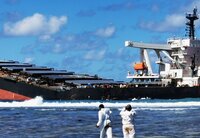
The aim of this paper is to highlight the common challenges that have arisen following serious containership incidents, focusing largely on the MSC CHITRA incident response in India, in order to
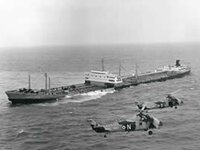
Over the last half century, particularly since the critical TORREY CANYON incident of 1967, the most noteworthy change has been the dramatic decline in the number of major tanker spills from an
Notification of a pollution incident should be made to the nearest port authority and to: The Public Corporation of Maritime Affairs Authority (MAA) Ministry of Transport P.O. Box 19395 Sana'a,
State Inspectorate for Protection of the Black Sea 30, R. Luksemburg Str. Odessa 27001 Tel: +380-482 711 7965 Fax: +380-482 711 7965 National Aquatic Search and Rescue Service Ministry of
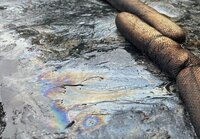
Most oils float on the sea surface where they are spread over a wide area by currents, wind and waves. Depending on the type of oil, it may disperse into the top few metres of the water column.