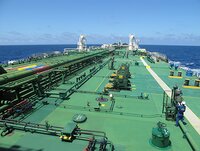
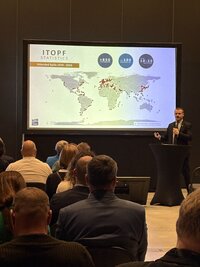
ITOPF's tanker spill statistics released today showed a slight increase in the number of large spills from tankers in 2013 compared to the previous two years but the downward trend is maintained.
This paper provides a global overview of the spatial distribution of accidental marine oil tanker spills of size 7 tonnes and over, based on ITOPF’s spills database, and explores spatio-temporal
The 1971 and 1992 International Oil Pollution Compensation Funds ("IOPC Funds") provide compensation to the victims of oil spills from tankers in countries which have ratified the 1971 and 1992 Fund
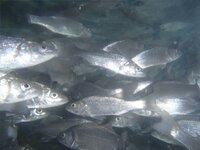
Fishing and aquaculture harvesting bans are increasingly used as an oil spill management tool, with the intention of protecting public health and consumer markets. Such bans are easily imposed, but a
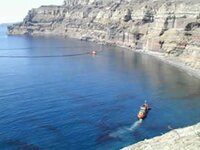
In April, 2007 the cruise ship SEA DIAMOND ran aground and sank off the Greek island of Santorini.The following paper picks up the story, 3 years on, looks at the current situation, compares it in a
Within the wider debate on the effectiveness of at-sea recovery, this paper investigates whether the particular characteristics of heavy oils warrant special consideration when planning and
A recent challenge for the shipping industry is the growing problem of plastic pellet spills. Plastic pellets, also known as nurdles, are typically the size of a lentil and the building blocks
Dr Conor Bolas of our Technical Team has been in Porvoo, Finland this week representing ITOPF in an EU Module Exercise (MODEX), a new discussion based exercise as part of the EU Civil Protection
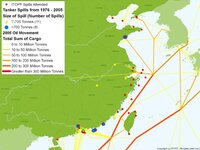
As the Chinese economy continues to develop at a rapid pace, shipping has also increased significantly over recent years. This rise in traffic brings a greater threat of oil pollution from vessels.
Oil spill response readiness and preparedness in the Baltic Sea and Finland was the first topic of conversation during the MARISEC 2025 Seminar in Kotka, Finland, where ITOPF joined to engage in