… To report a spill of oil, chemicals or other substance, please call us on the number above for advice and/or to mobilise us to site. Your call will be forwarded to an ITOPF Technical Adviser who will require as…
… Oil spills from shipping accidents and offshore blowouts are rare, but when they happen the impact on the environment, on livelihoods and on the local economy can be severe. In this series of seven films, we tackle…
… We maintain a worldwide database of accidental oil spills from tankers, combined carriers and barges. This is used to generate statistics on numbers and sizes of spill, and to identify the causes of spills. …
… Links to websites containing information on marine spills and related issues and to other relevant or related organisations. (Inclusion in this list does not mean that ITOPF endorses the information on the websites…
… ITOPF promotes effective response to marine spills of oil, chemicals and other hazardous substances. We are funded by the world's shipowners and their insurers and operate on a not-for-profit basis. ITOPF's…
… Our extensive first-hand experience of marine spill incidents over half a century has been distilled into a series of films “Response to Marine Oil Spills”, 19 Technical Information Papers (TIPs) and a multitude…
… The Country & Territory Profiles provide a summary of spill response arrangements and resources in maritime nations. They were originally developed in 1993 to help shipowners produce the Shipboard Oil Pollution…
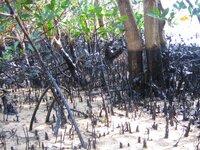
…An oiled mangrove following a spill in the Philippines, August 2008. Oil smothers the mangrove's root systems preventing the exchange of gases and leading to asphyxiation.