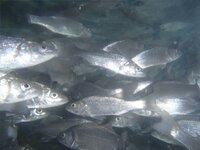
Fishing and aquaculture harvesting bans are increasingly used as an oil spill management tool, with the intention of protecting public health and consumer markets. Such bans are easily imposed, but a
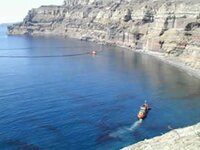
In April, 2007 the cruise ship SEA DIAMOND ran aground and sank off the Greek island of Santorini.The following paper picks up the story, 3 years on, looks at the current situation, compares it in a
Within the wider debate on the effectiveness of at-sea recovery, this paper investigates whether the particular characteristics of heavy oils warrant special consideration when planning and
A recent challenge for the shipping industry is the growing problem of plastic pellet spills. Plastic pellets, also known as nurdles, are typically the size of a lentil and the building blocks
Dr Conor Bolas of our Technical Team has been in Porvoo, Finland this week representing ITOPF in an EU Module Exercise (MODEX), a new discussion based exercise as part of the EU Civil Protection
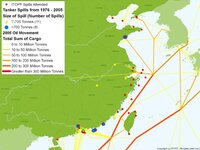
As the Chinese economy continues to develop at a rapid pace, shipping has also increased significantly over recent years. This rise in traffic brings a greater threat of oil pollution from vessels.
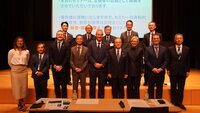
Members of the ITOPF technical team embarked on another roadshow tour of maritime stakeholders, this time in Japan, as it continue its efforts to meet with, share knowledge, and discuss solutions to
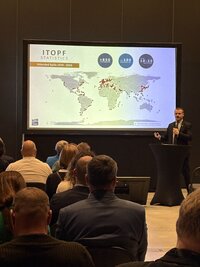
Oil spill response readiness and preparedness in the Baltic Sea and Finland was the first topic of conversation during the MARISEC 2025 Seminar in Kotka, Finland, where ITOPF joined to engage in
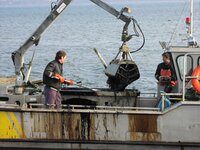
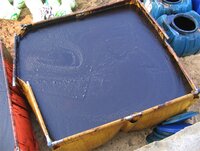
Experience has shown that the most time-consuming and costly component of a response to an oil spill is often the treatment or disposal of collected waste. The amount of waste generated is dependent
Tim Wadsworth has degrees in engineering and in law. He joined ITOPF in 1991 and has been involved subsequently in many spills internationally, assisting primarily in the assessment of claims