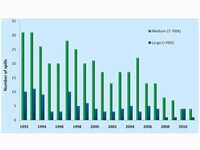
This paper examines trends in tanker oil spills worldwide over a 20 year period from 1992 to 2011 and analyses potential influences on spill volumes and frequencies for incidents in the spill size
Once oil is spilled at sea, it will naturally spread, fragment and disperse under the influence of wind, waves and currents. For spills in coastal waters, the oil will often drift towards the
Direccion General Adjunta de Oceanografia, Hidrografia y Meterologia Edificio B, Primer Nivel Eje Dos Oriente, Tramo Hca.Esc.Naval Militar Num. 861 Colonia Los Ciipreses Delegacion Coyoacan CP 0480,
Ports and Maritime Organisation (PMO) (for oil & HNS) Department of Safety and Marine Environment Protection PMO Building South Didar Street Shahaid Haghani Highway Vanak Square Tehran PO Box
We maintain a worldwide database of accidental oil spills from tankers, combined carriers and barges. This is used to generate statistics on numbers and sizes of spill, and to identify the causes