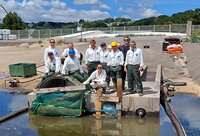
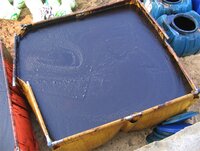
ITOPF staff made a trip to Brest, France as some of its team visited Cedre’s facilities to take part in a four-day exchange of experience and theoretical and practical training.
Experience has shown that the most time-consuming and costly component of a response to an oil spill is often the treatment or disposal of collected waste. The amount of waste generated is dependent
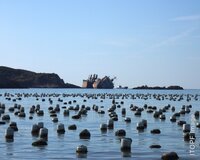
Response actions and mitigation measures, undertaken at the time of a spill specifically to protect seafood resources can ultimately influence the duration, magnitude and extent of impacts. This
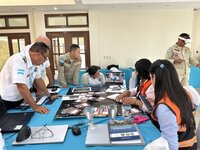
ITOPF embarked on a tour of maritime stakeholders in Central America as part of a series of training sessions and workshops on responding to ship-source pollution incidents in partnership with the
This paper uses information from ITOPF attended incidents to look at trends in conducting post-spill studies, and offer a number of possible reasons for these trends; including a general heightened
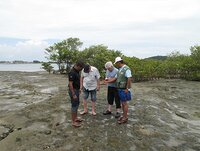
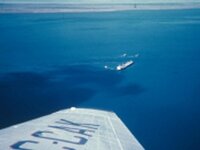
METULA grounded in the eastern Strait of Magellan, on 9th August 1974. Around 47,000 tonnes of light Arabian crude oil and 3,000 to 4,000 tonnes of heavy fuel oil are estimated to be have been lost.