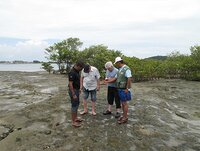
This paper uses information from ITOPF attended incidents to look at trends in conducting post-spill studies, and offer a number of possible reasons for these trends; including a general heightened
An annual publication providing data on accidental oil spills from tankers, combined carriers and barges since 1970, derived from ITOPF's database. Published each January.
Spills should be reported to the appropriate port authority and to: Departmento de Prevencion y Control de Contaminacion Direccion General de la Marina Mercante Y del Litoral (DIGMER) Malecon Simon
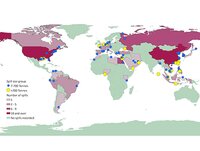
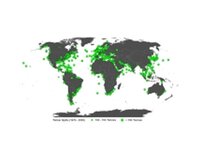
This poster presents the results of an analysis of various aspects of incident information for tanker spills seven tonnes and over within the past ten years (2005-2014).
During the initial phase of a response, aerial reconnaissance can help response personnel assess the location and extent of oil contamination and verify predictions of movement and fate of oil at
In the early hours of 25th May 2010, tanker BUNGA KELANA 3 (57,017GT, built 1998) collided with bulk carrier WAILY (15,272GT, built 1983) in the traffic separation scheme within the Singapore Strait,
Assessing the risk of oil spills from ships has long been of interest to the maritime industry. Many factors affect the frequency of accidental oil spills, including the amount of oil transported and
Containing floating oil within booms for recovery by specialised skimmers is often seen as the ideal solution to a spill at sea as this aims to physically remove oil from the marine environment. As
There are eight main weathering processes: Spreading Evaporation Dispersion Emulsification Dissolution Oxidation Sedimentation and sinking Biodegradation As a general rule,