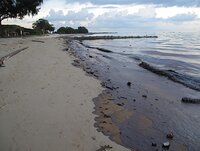
In the early hours of 25th May 2010, tanker BUNGA KELANA 3 (57,017GT, built 1998) collided with bulk carrier WAILY (15,272GT, built 1983) in the traffic separation scheme within the Singapore Strait,
Once oil is spilled at sea, it will naturally spread, fragment and disperse under the influence of wind, waves and currents. For spills in coastal waters, the oil will often drift towards the
There are eight main weathering processes: Spreading Evaporation Dispersion Emulsification Dissolution Oxidation Sedimentation and sinking Biodegradation As a general rule,
We maintain a worldwide database of accidental oil spills from tankers, combined carriers and barges. This is used to generate statistics on numbers and sizes of spill, and to identify the causes
The recent high-profile incident involving the crude oil tanker, SANCHI, in the East China Sea has focused attention on the potential hazards of transporting condensate by sea. Ship-source spills
Contamination of coastal areas with high amenity value is a common feature of many oil spills. In addition to costs incurred by clean-up activities, serious economic losses can be experienced by
Bringing together operational, scientific and industry expertise through live exercises and conferences remains an important element in strengthening global spill preparedness and response. ITOPF
ITOPF is a primary source of information on ship-source pollution. This includes: 18 Technical Information Papers (TIPs) which cover specific spill-related topics illustrated with our photos