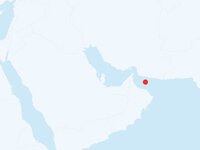
The South Korean tanker SEA STAR was on voyage from Ras Tanura, Saudi Arabia to Rio de Janeiro, Brazil when it collided with the Brazilian tanker HORTA BARBOSA in the Gulf of Oman on 19th December
This paper describes commonly used shoreline clean-up techniques and provides advice on which are best suited to each stage of operations for a range of different shoreline types.
Experience has shown that the most time-consuming and costly component of a response to an oil spill is often the treatment or disposal of collected waste. The amount of waste generated is dependent
ITOPF's tanker spill statistics released today showed a slight increase in the number of large spills from tankers in 2013 compared to the previous two years but the downward trend is maintained.
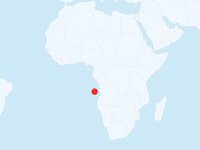
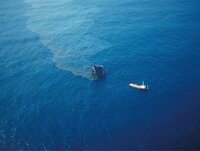
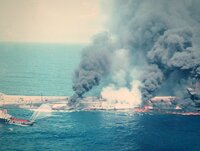
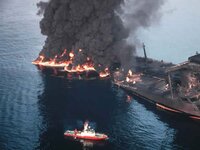
On 28th May 1991, ABT SUMMER, fully laden with a cargo of 260,000 tonnes of Iranian heavy crude oil, experienced an explosion and a fire about 900 miles off the coast of Angola.
CASTILLO DE BELLVER was carrying 252,000 tonnes of light crude oil (Murban and Upper Zakum), when it caught fire about 70 miles north-west of Cape Town, South Africa.
On 19th of July 1979, two fully loaded VLCCs (very large crude carriers), the ATLANTIC EMPRESS and AEGEAN CAPTAIN, were involved in a collision approximately 10 miles off Tobago during a tropical
On 11th April 1991 the very large crude carrier HAVEN, with 144,000 tonnes of Iranian heavy crude oil onboard, suffered an explosion while anchored in Genoa Roads.
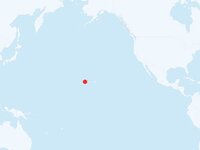
On 23rd February 1977, HAWAIIAN PATRIOT, fully loaded with 99,000 tonnes of light Indonesian crude oil, en route from Indonesia to Honolulu, reported a crack in its hull plating during a storm. This